 Arun Kumar M
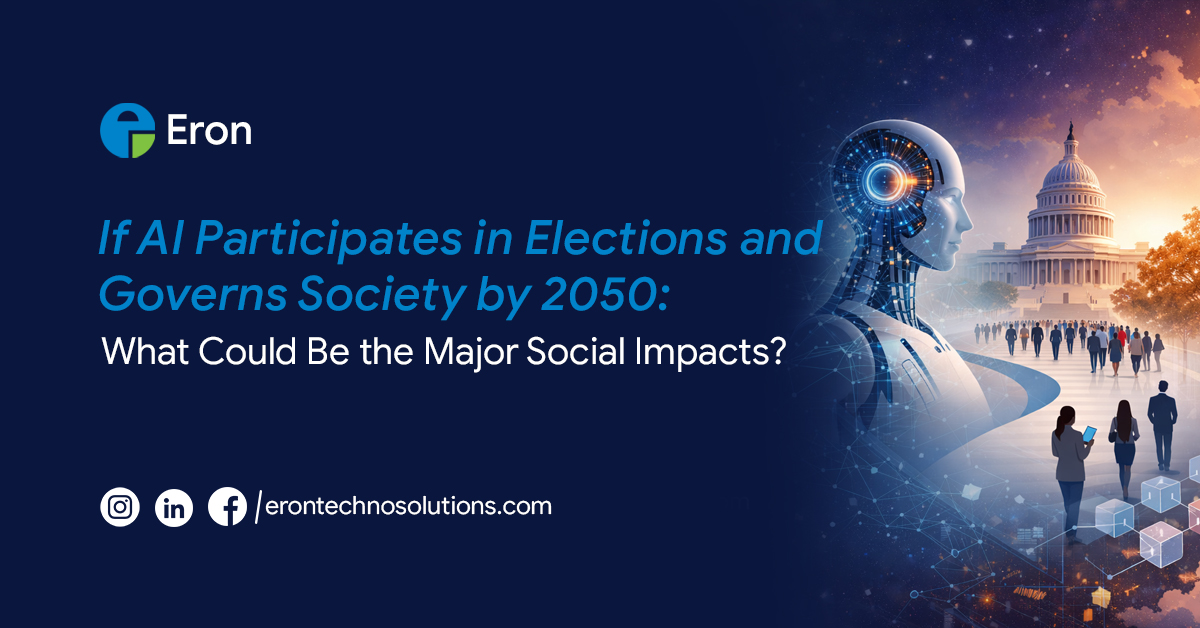
Artificial Intelligence is already part of daily life, from recommendation systems to healthcare technologies. As AI becomes more advanced, some experts wonder whether it could influence elections or government decision-making in the future. If AI becomes involved in governance by 2050, it could change how political systems function, how leaders make decisions, and how citizens participate in democracy.
The Expanding Role of AI in Political Campaigns
Political campaigns increasingly use digital tools and data analysis to understand voters. AI can analyze social media discussions, voting patterns, and public opinions to help campaign teams create targeted messages. While this can improve communication with voters, it also raises ethical concerns about whether such targeted messaging could influence or manipulate public opinion.
The Threat of AI-Generated Misinformation
AI can create realistic images, audio, and videos known as deepfakes. These can imitate public figures and spread misleading information online. During elections, such content could influence voters if it spreads quickly on social media. Even if false information is later corrected, it may already affect public perception and election outcomes.
AI and Decision-Making in Government
AI systems can analyze large amounts of data to help governments make decisions about issues such as economic planning, healthcare, or infrastructure. These systems could help policymakers identify patterns and predict future trends. However, relying on algorithms also raises questions about accountability, especially if automated systems make mistakes or biased decisions.
Erosion of Trust in Democratic Institutions
Democracy depends heavily on public trust. If people believe that political messages, speeches, or information are created or manipulated by AI systems, trust in democratic institutions may decline. In addition, individuals accused of wrongdoing might claim that evidence against them is fake or AI-generated, making it harder for the public to determine the truth.
Opportunities for Citizen Participation
Despite the risks, AI may also help increase citizen participation in politics. AI-based tools can translate political information into multiple languages, helping more people access important information. Online platforms and digital assistants could also help citizens understand policies, government programs, and voting procedures more easily.
Social Consequences Beyond Politics
The use of AI in governance may also affect society in broader ways. Automation could change how government institutions operate, with some administrative tasks handled by AI systems. At the same time, new professions may emerge in areas such as AI ethics, regulation, and technology oversight, requiring new skills and education.
Ethical and Regulatory Considerations
Because AI could influence political systems, strong ethical guidelines and regulations will be necessary. Governments may introduce rules requiring transparency when AI is used in political communication. Technologies such as digital watermarking may also help identify AI-generated content and reduce the spread of misleading information.
Preparing for an AI-Driven Political Future
Managing AI in politics will require cooperation between governments, technology companies, researchers, and citizens. Policymakers must create regulations that protect democratic systems while still allowing technological innovation. At the same time, citizens will need stronger digital literacy skills to evaluate online information critically.
Conclusion
By 2050, AI could play a significant role in political systems. It may improve decision-making and citizen engagement, but it also carries risks such as misinformation and declining trust. The impact of AI on democracy will depend on how responsibly societies develop, regulate, and use these powerful technologies.