 eronadmin
How Agentic AI Is Reshaping Business Operations in 2026
Remember the first time you used a chatbot on a website? You typed a question, it gave you a scripted answer, and half the time you ended up clicking “talk to a human” anyway. Fast forward to 2026, and that picture looks completely different. Today, businesses aren’t just deploying AI to answer FAQs – they’re using it to run entire workflows, make real-time decisions, and handle multi-step processes, often without a human lifting a finger. This is the world of agentic AI.
What Is Agentic AI?
Traditional AI responds to a prompt. You ask, it answers. Agentic AI is different – it understands a broader goal, breaks it into subtasks, executes those tasks using tools and data, and adapts when things don’t go as planned. Think of the difference between a receptionist who answers your question and a project manager who takes your brief and delivers a finished result. That’s the gap between a chatbot and an AI agent.
The Shift Is Already Happening
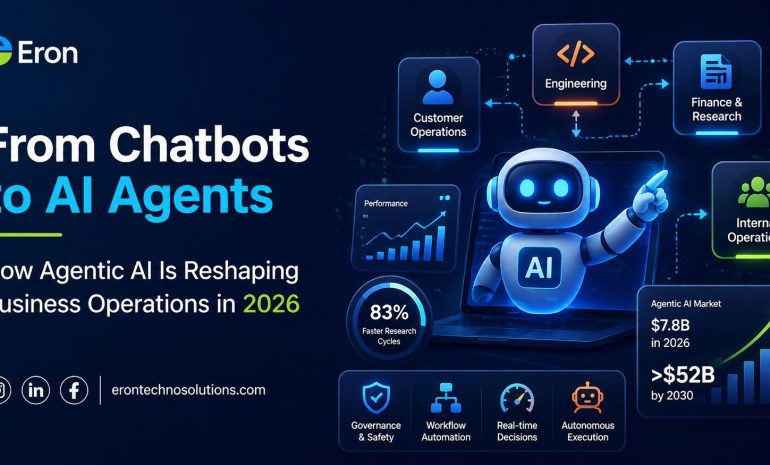
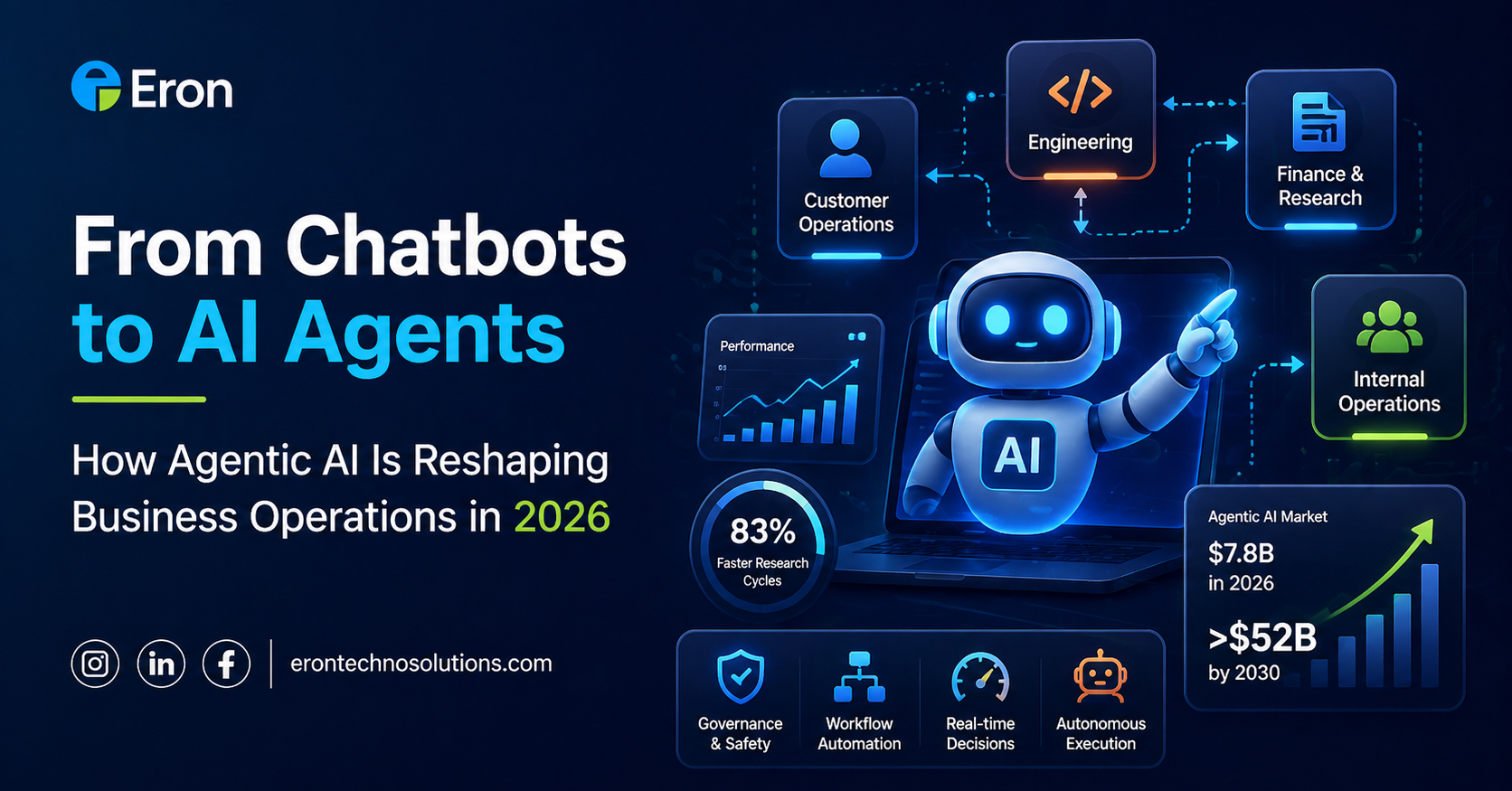
This isn’t future speculation. In April 2026, landmark deployments from EY, Oracle, Salesforce, and Microsoft confirmed that agentic AI has moved from pilots to production. At JPMorgan, AI agents cut research cycles for portfolio managers by 83% and automate over 360,000 manual work hours yearly. Salesforce’s deployment at Reddit reportedly drove an 84% reduction in case resolution times, saving over $100 million annually. The agentic AI market sits at $7.8 billion today and is projected to exceed $52 billion by 2030.
Where It’s Making the Biggest Impact
Agentic AI is showing up across every major business function:
- Customer Operations: Agents manage entire customer journeys, escalate issues intelligently, and resolve problems without human involvement.
- Engineering: Valeo now has 35% of its code generated or optimized by AI, freeing engineers for higher-level design work.
- Finance & Research: AI agents synthesize research, monitor markets, and prepare documents at a speed no analyst team can match.
- Internal Operations: Procurement, HR, supply chain – organizations are redesigning workflows from scratch to support autonomous execution.
It’s Not All Smooth Sailing
Governance is the biggest risk. AI agents make real-time decisions with real consequences – financial, legal, operational. Most organizations are deploying agents faster than they’re putting guardrails in place. Enterprise agent development in 2026 costs $60,000 to over $300,000 for production-grade systems, with integration and governance consuming up to 60% of that budget. And most pilots still fail – not because of the technology, but because companies skip the process redesign and people preparation that makes it work.
Final Thought
The businesses winning with agentic AI right now are treating it as an organizational transformation, not just a tech rollout. Start with clearly defined workflows, build governance in from day one, and invest in your people as much as your systems. The technology is ready – the question is whether your organization is.
References
- Deloitte Insights — Agentic AI Strategy (February 2026) https://www.deloitte.com/us/en/insights/topics/technology-management/tech-trends/2026/agentic-ai-strategy.html
- MachineLearningMastery.com — 7 Agentic AI Trends to Watch in 2026 (January 2026) https://machinelearningmastery.com/7-agentic-ai-trends-to-watch-in-2026/