 eronadmin
Introduction
Traditional security systems once depended heavily on IP addresses and browser User-Agent strings to detect suspicious activity. While these methods are still useful, they are no longer sufficient against modern abuse techniques. Attackers now use VPNs, proxy networks, automated browsers, and device emulators to hide their identity and bypass simple detection systems.
To effectively prevent fraud, spam, fake registrations, and automated attacks, modern platforms require a multi-layered anti-abuse strategy that analyzes behavior, devices, sessions, and network patterns together.
Why Traditional Tracking Fails
IP Addresses Can Be Easily Changed
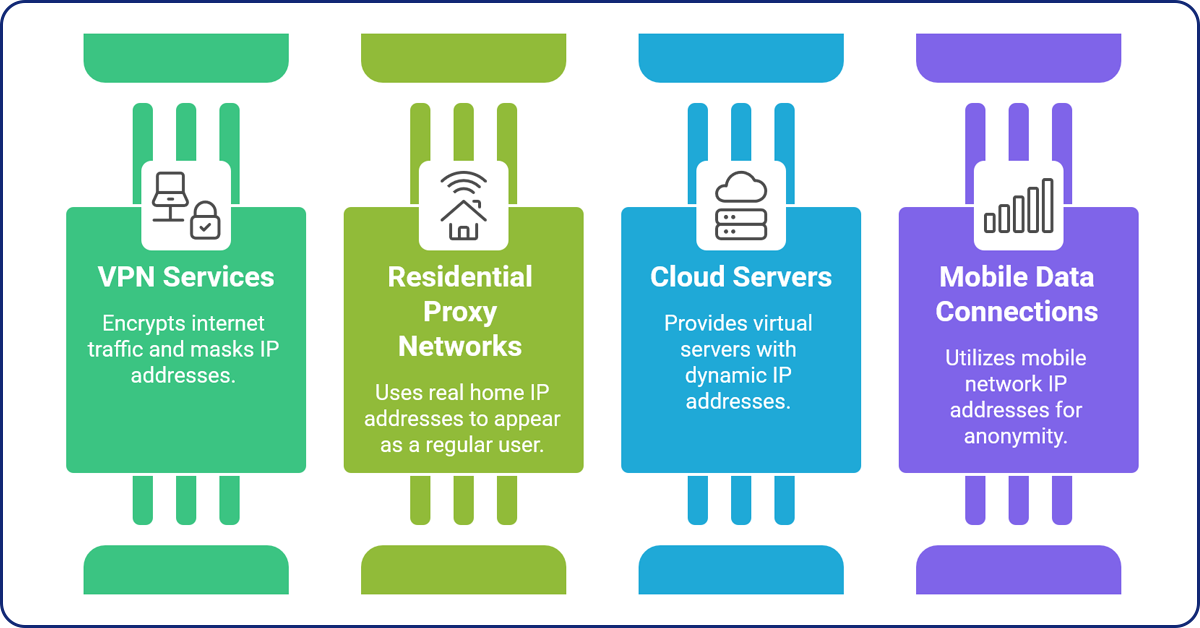
Attackers frequently rotate IP addresses using:
- VPN services
- Residential proxy networks
- Cloud servers
- Mobile data connections
As a result, blocking a single IP often has little long-term impact.
User-Agent Strings Are Easy to Spoof
A User-Agent only describes the browser and operating system being reported. Automated tools can easily fake this information to appear like a normal user.
For example A bot can pretend to be:
- Google Chrome on Windows
- Safari on iPhone
- Firefox on Linux
Because of this, User-Agent tracking alone provides very weak protection.
Essential Components of a Modern Anti-Abuse System
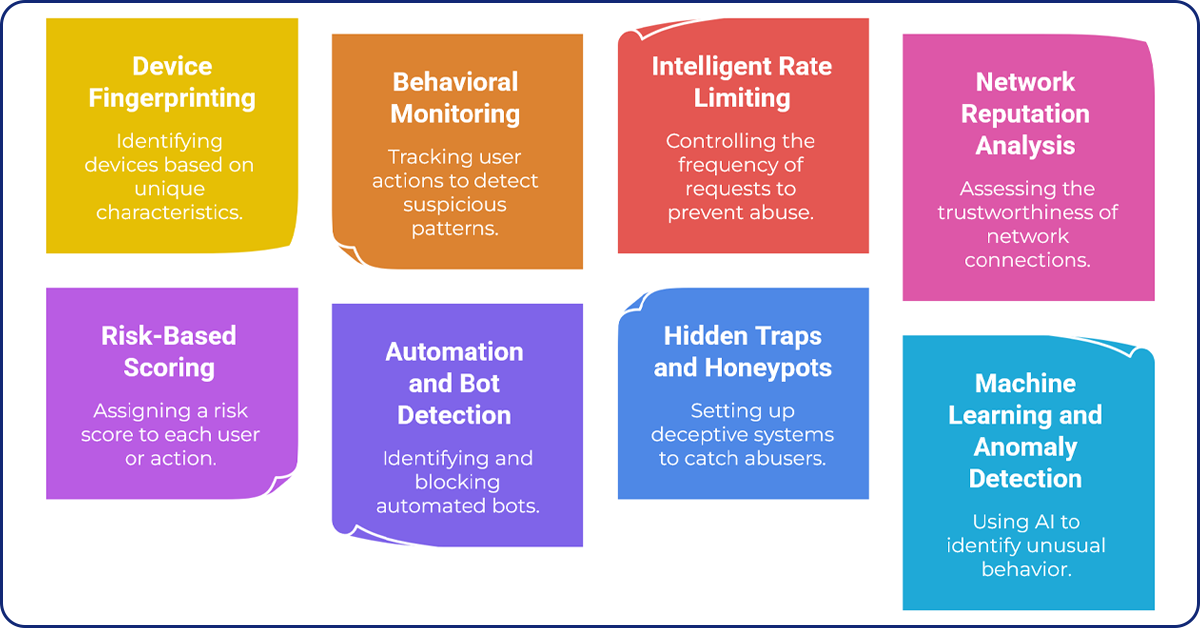
1. Device Fingerprinting
Device fingerprinting creates a unique profile of a browser or device using multiple technical characteristics.
Common fingerprint signals include:
- Screen size
- Browser language
- Hardware information
- Audio processing patterns
Even if a user changes their IP address, many of these device characteristics remain similar, making it easier to identify repeated abuse attempts.
2. Behavioral Monitoring
Human behavior is difficult for automated systems to imitate consistently.
Useful behavioral indicators:
- Mouse movement patterns
- Typing speed and rhythm
- Click timing
- Navigation flow
Behavioral analysis helps distinguish real users from automation tools.
3. Intelligent Rate Limiting
Modern rate limiting should go beyond simple IP restrictions.
Better tracking methods include:
- Requests per device fingerprint
- Account creation frequency
- OTP request patterns
- Activity per session
- Requests from similar network ranges
This approach identifies coordinated abuse even when multiple IP addresses are involved.
4. Network Reputation Analysis
Understanding the source network improves risk detection.
Important checks include:
- VPN detection
- Datacenter identification
- Proxy usage
- Tor network usage
For example: If a login suddenly appears from two distant countries within minutes, the activity may be suspicious.
5. Risk-Based Scoring
Instead of immediately blocking users, modern systems assign a dynamic risk score.
Example factors:
| Signal | Risk Impact |
|---|---|
| VPN detected | Medium |
| Automated browser detected | High |
| Normal human interaction | Low |
| Known malicious fingerprint | Very High |
- Request CAPTCHA
- Require OTP verification
Risk-based systems reduce false positives while maintaining strong protection.
6. Automation and Bot Detection
Bots increasingly use advanced frameworks such as:
- Selenium
- Puppeteer
- Playwright
Detection methods may include:
- Browser capability validation
- Timing inconsistencies
- Headless browser indicators
Since attackers constantly improve automation tools, combining multiple detection methods is essential.
7. Hidden Traps and Honeypots
Honeypots are invisible elements designed to catch automated systems.
Examples:
- Hidden form fields
- Invisible links
- Fake buttons
- Background validation tokens
Real users never interact with these elements, but bots often do, making them effective detection tools.
8. Machine Learning and Anomaly Detection
Large platforms often use machine learning to detect unusual activity patterns.
Common use cases:
- Spam detection
- Fraud prediction
- Account takeover prevention
- Bot identification
Machine learning works best when combined with traditional security rules and human review.