 eronadmin
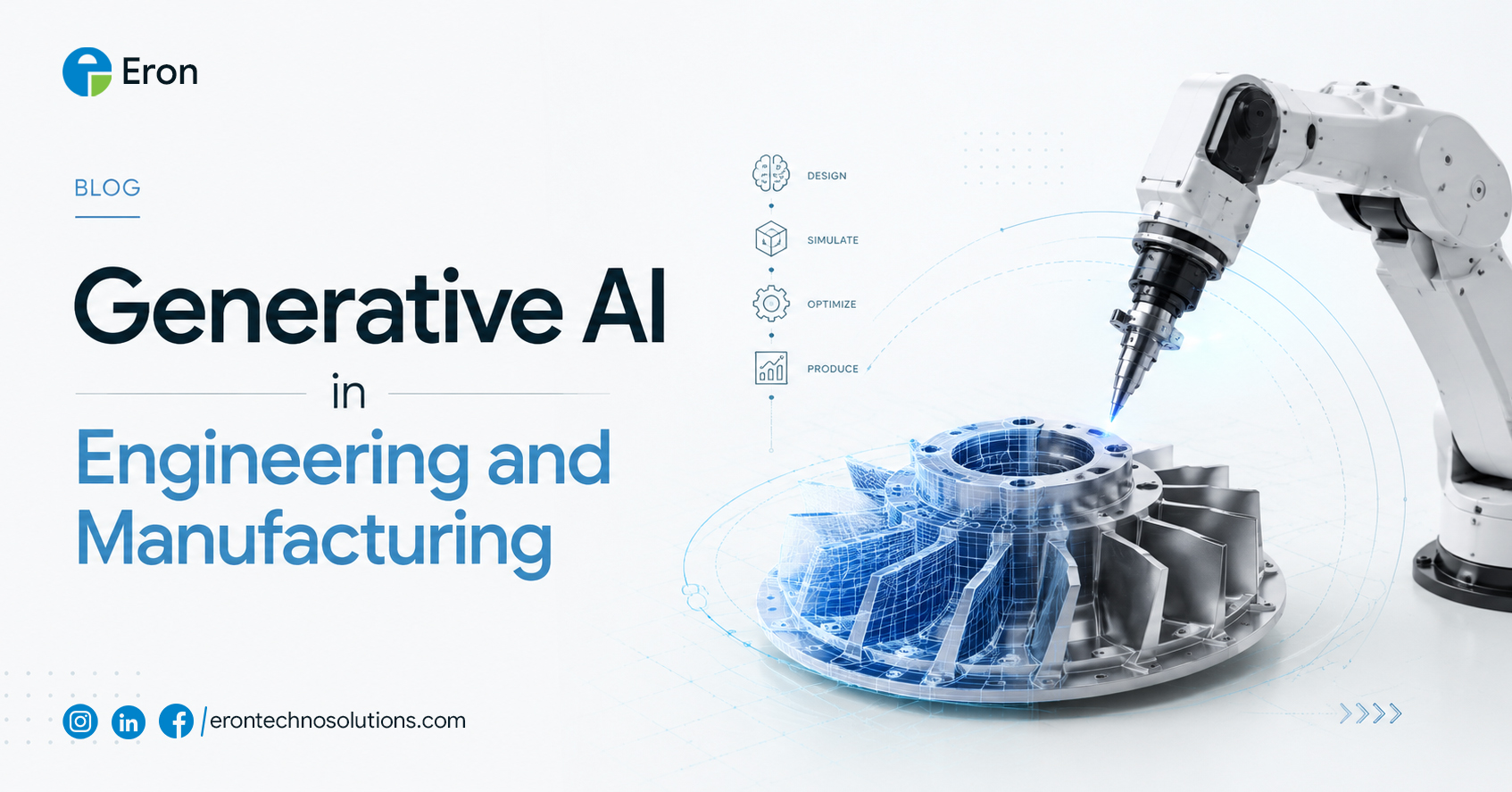
The engineering and manufacturing sectors are entering a new era driven by the rapid advancement of Generative Artificial Intelligence (AI). Generative AI is transforming how products are designed, manufactured, and maintained by enabling organizations to improve efficiency, reduce costs, accelerate innovation, and bring products to market faster than ever before.
What Is Generative AI?G
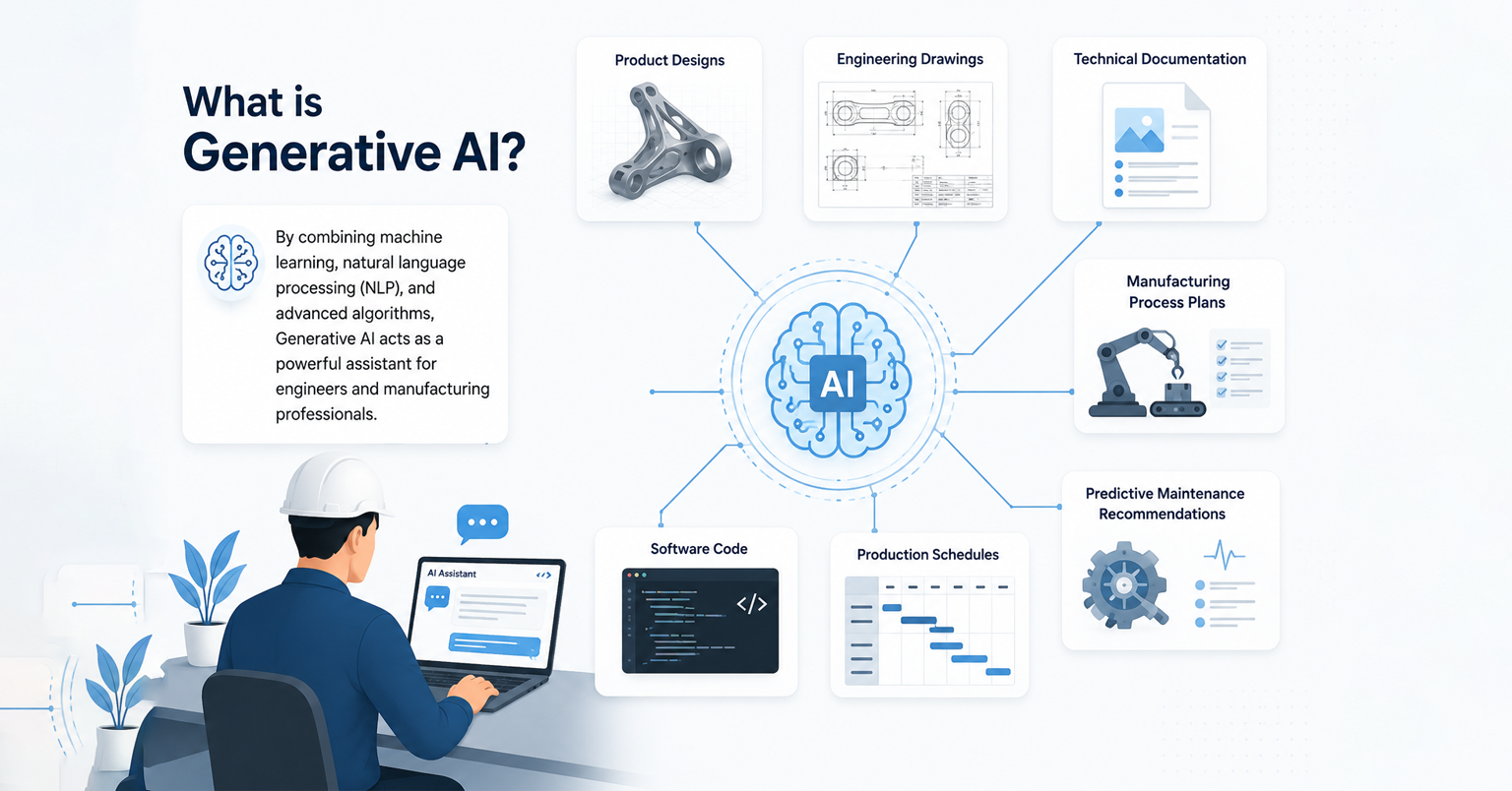
Generative AI refers to artificial intelligence systems capable of creating:
- Product designs
- Engineering drawings
- Technical documentation
- Manufacturing process plans
- Predictive maintenance recommendations
- Software code
- Production schedules
By combining machine learning, natural language processing (NLP), and advanced algorithms, Generative AI acts as a powerful assistant for engineers and manufacturing professionals.
The Growing Role of Generative AI in Engineering
1. Accelerated Product Design
Traditional product design requires multiple iterations and extensive testing. Generative AI helps by:
- Creating multiple design alternatives quickly
- Considering weight constraints and material specifications
- Meeting performance targets and cost limitations
- Reducing overall development time
2. Design Optimization
Generative AI analyzes engineering parameters and suggests improvements such as:
- Reduced material usage
- Improved structural strength
- Enhanced energy efficiency
- Lower manufacturing costs
This enables companies to develop high-performance products while maintaining cost-effectiveness.
3. Automated Technical Documentation
Engineering projects require extensive documentation, including:
- Product specifications
- Installation manuals
- Maintenance guides
- Compliance reports
Generative AI can automatically generate and update these documents, improving consistency and reducing manual effort.
4. Faster Prototyping
AI-generated designs can be integrated directly into CAD and simulation tools, enabling:
- Faster concept validation
- Reduced physical prototyping costs
- Shorter development cycles
- Faster market entry
How Generative AI Is Revolutionizing Manufacturing
1. Intelligent Production Planning
Generative AI helps manufacturers by:
- Generating optimized production schedules
- Balancing workloads across machines
- Predicting production bottlenecks
- Improving resource utilization
Benefits:
- Increased productivity
- Reduced operational delays
- Better resource management
2. Predictive Maintenance Support
Equipment downtime can significantly impact production.
Generative AI assists by:
- Analyzing machine performance data
- Identifying potential failures
- Generating maintenance recommendations
- Creating proactive service schedules
Benefits:
- Reduced equipment breakdowns
- Extended machine lifespan
- Lower maintenance costs
3. Quality Control Enhancement
Generative AI improves product quality through:
- Defect detection
- Inspection data analysis
- Process improvement recommendations
- Automated quality reporting
Benefits:
- Consistent product quality
- Reduced waste
- Lower rework costs
4. Supply Chain Optimization
Generative AI strengthens supply chain operations by:
- Forecasting demand
- Optimizing inventory levels
- Identifying supply risks
- Recommending sourcing strategies
Benefits:
- Improved business continuity
- Better inventory management
- Enhanced customer satisfaction
Benefits of Generative AI in Engineering and Manufacturing
Increased Innovation
- Enables exploration of thousands of design possibilities
- Encourages creative and breakthrough solutions
Reduced Costs
- Optimizes product designs
- Minimizes material waste
- Improves operational efficiency
Faster Time-to-Market
- Automates design generation
- Accelerates simulations and documentation
- Speeds up product development cycles
Improved Productivity
- Reduces repetitive tasks
- Allows teams to focus on strategic activities
Better Decision-Making
- Provides AI-driven insights
- Supports data-based business decisions
Real-World Applications of Generative AI
Automotive Industry
- Lightweight vehicle component design
- Manufacturing process optimization
- Predictive maintenance systems
Aerospace Industry
- Design optimization
- Fuel efficiency improvements
- Advanced simulation modeling
Industrial Machinery
- Equipment performance enhancement
- Maintenance planning
- Production workflow optimization
Consumer Products
- Product design iterations
- Customized product development
- Improved manufacturing efficiency
Challenges to Consider
Despite its advantages, organizations must address several challenges:
- Data quality and availability
- Integration with existing systems
- Intellectual property concerns
- Workforce training requirements
- Cybersecurity and data protection
Successful implementation requires both investment and organizational readiness.
The Future of Generative AI in Manufacturing
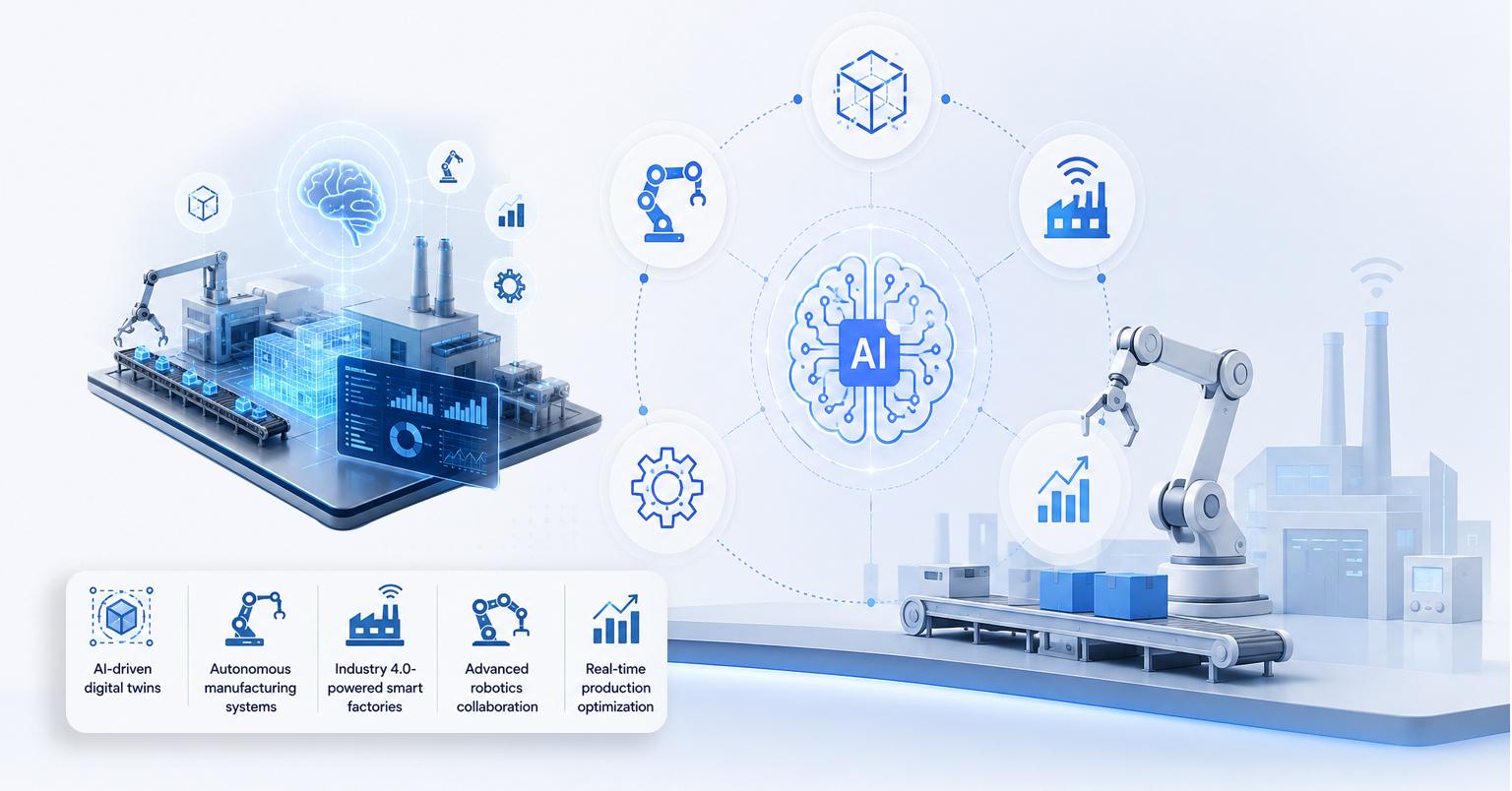
Emerging developments include:
- AI-driven digital twins
- Autonomous manufacturing systems
- Industry 4.0-powered smart factories
- Advanced robotics collaboration
- Real-time production optimization
As these technologies mature, Generative AI will become an essential tool for achieving efficiency, innovation, and competitive advantage.
Conclusion
Generative AI is transforming engineering and manufacturing by enabling:
- Faster product development
- Smarter production planning
- Enhanced quality control
- Improved operational efficiency
By automating complex tasks and generating innovative solutions, Generative AI helps organizations overcome traditional limitations and achieve new levels of performance.
Businesses that embrace Generative AI today will be better positioned to lead the next generation of industrial innovation, deliver higher-quality products, reduce costs, and respond effectively to evolving market demands.